Optimizing and expanding American energy infrastructure through co-located power for AI data centers
Wind and solar farms curtail power when local demand can't absorb it, wasting energy and undercutting new investment in the best resource regions. Crusoe's "across the meter" model co-locates AI data centers at the source to capture that power, incentivize repowering, and strengthen the grid.
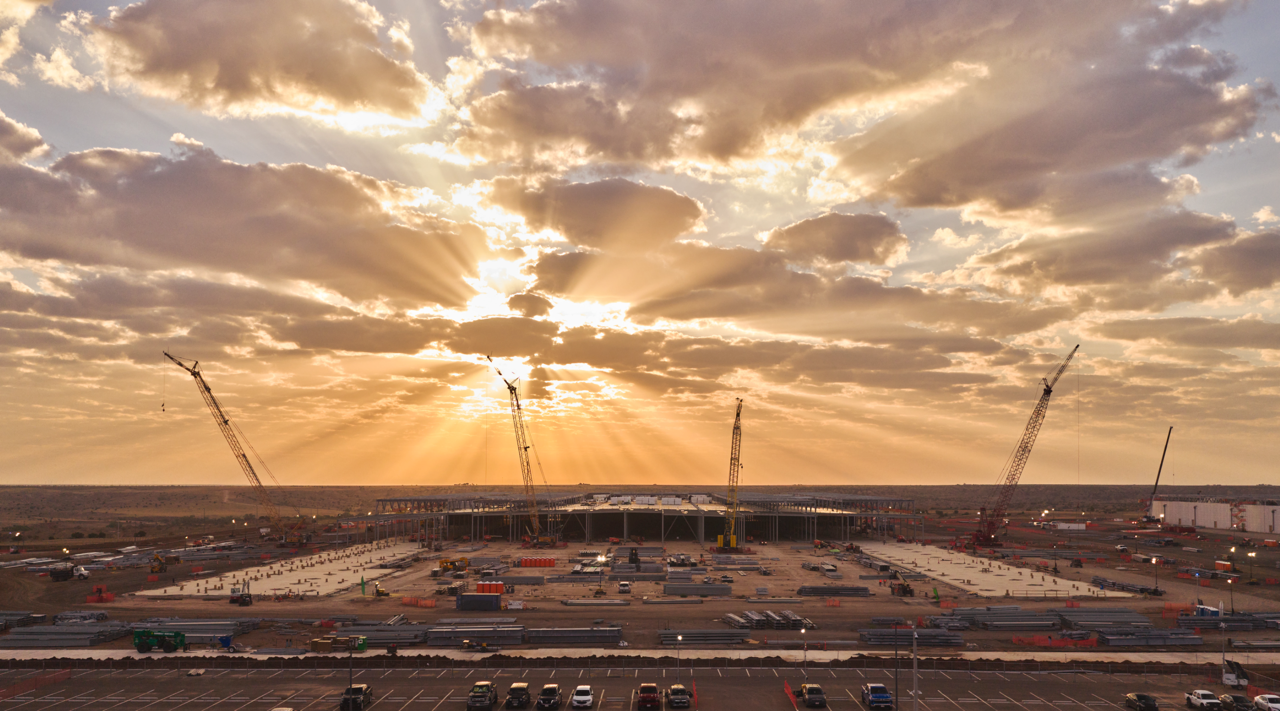
The U.S. is currently experiencing a surge in electricity demand after nearly two decades of relative stagnation. The rise in demand results from the growth of AI data centers, combined with the reshoring of manufacturing, and the electrification of buildings and transportation. To keep up with this demand growth, it is clear that we need new energy investments to build additional electricity generation capacity — however, large-scale power infrastructure development takes time.
As we accelerate investment in new generation resources, we must also make the most of existing and available power generation. Here at Crusoe, we see this dual mandate of net new power build-out plus optimization of existing resources as an exciting and nuanced opportunity. Crusoe remains committed to a strategy of energy-first digital infrastructure development — bringing computing to abundant energy resources rather than transporting energy long distances to urban data centers.
The curtailment problem
Considerable wind and solar power potential is lost when output from large utility-scale wind and solar farms is curtailed — meaning generation is deliberately reduced or shut down, producing less energy than the power plants otherwise could. Why does curtailment happen?
The windiest areas and those most suitable for solar production are often in remote locations with limited local demand. On windy and sunny days, this dynamic leads to distortions in supply and demand. In some sections of the grid, this problem is so acute that power prices actually go negative as generation exceeds local demand. This is further compounded by transmission congestion as many power plants attempt to send power through the same lines to the same distant urban markets.
Negative pricing has two damaging effects on the energy investment landscape. First, when power prices go negative, plant operators must curtail or cease generation unless they benefit from subsidies such as production tax credits — which phase out over time, leaving a growing share of renewable generators exposed to real negative pricing risk. Second, new investment in wind and solar can be paradoxically difficult to underwrite in areas with the best resources because of local grid pricing dynamics. This means less development in exactly the parts of the country most suited for renewable energy.
Curtailment adds up to big numbers. According to the Independent Market Monitor for ERCOT's 2025 State of the Market Report, roughly 4.7% of wind generation was curtailed in 2025 — a trend that has held steady over the last five years even as demand has surged: power that could have supported beneficial uses had it not been stranded locally. And even when power economics support shipping power to distant markets, the U.S. Energy Information Administration (EIA) estimates that roughly 5% of electricity is lost moving electrons from where they're generated to where they're needed during transmission and distribution.
The solution: Co-location and an "across the meter" approach
One of the key things we've learned since Crusoe was founded is that it's easier to move data than power. This is why Crusoe's original business model brought modular data centers to remote oil production sites to capture gas that was otherwise being wastefully flared. The same logic now applies to stranded renewable energy: by co-locating AI data centers directly at the source of generation, we are a reliable energy consumer that mitigates curtailment and negative pricing, and supports renewable energy production. The result is access to power that would otherwise be curtailed or stranded — often at costs well below what grid-delivered power commands — making data centers co-located with energy generation one of the most capital-efficient ways to power large-scale AI infrastructure.
Co-locating load with generation also creates a powerful new incentive for renewable developers to repower and upgrade existing assets. Historically, repowering decisions were driven primarily by the availability of production tax credits — shaped more by tax policy than by what made sense for grid performance or capital efficiency. Co-located load changes that calculus entirely. When a data center is sited directly at a generation facility, the project owner has a direct commercial relationship with a high-value electricity consumer that rewards maximizing output — creating an organic, market-driven reason to upgrade aging turbines and adopt newer systems. And because existing wind and solar sites already carry permitted land, interconnection agreements, and community relationships that took years to develop, a repowering developer can direct capital almost entirely toward the generation upgrade itself. The result is more renewable capacity added per dollar spent, faster, and on sites already proven to have strong wind and solar resources.
But co-location at Crusoe goes further than simply consuming power from the local grid. Our approach is what we call "across the meter": our data center campuses are designed around a diverse portfolio of energy resources and storage — from renewables and battery energy storage systems — that enables us to be a responsible participant on the grid. In certain scenarios, when onsite generation exceeds campus load, excess power can flow onto the grid rather than being curtailed and wasted.
When generation falls short, the campus draws incremental power from the grid to firm up load. The result is data centers that behave less like a large passive load and more like a distributed energy resource that can enhance the resiliency of the grid and drive down costs for local ratepayers.
Looking forward
At Crusoe we continue to drive forward our vision of energy-first AI infrastructure. That means optimizing existing power generation assets, building net new generation, and investing in innovative energy technologies that make the grid more resilient and more efficient. By thoughtfully adding load and generation capacity to the grid, where the fixed costs of existing transmission and distribution infrastructure are shared across all participants, we are benefitting all ratepayers by spreading those costs across more megawatts and which has the potential to lower the per-unit cost of electricity for everyone. The "across the meter" model — co-located, multi-resource, and bi-directional — is how we believe large-scale AI infrastructure should be built: not as a burden on the grid, but as an asset to it.
To anyone reading this who has a passion for energy and AI infrastructure, please check out our career site. Crusoe is growing and hiring, and we would love to speak with you about a wide range of career opportunities.